Where Are “Wogs” From? Exploring Subjective Understandings of Racism

Where are wogs from? Exploring subjective understandings of racism

This article was first published in 2004 as part of the refereed proceedings of The Australian Sociological Association Conference.

Abstract

This paper examines subjective understandings of racism expressed by fifty second generation migrant-Australian women. Twenty-five participants came from Turkish backgrounds and 25 participants came from Latin American backgrounds.  The paper focuses on three examples of everyday social interaction and considers how these examples might be connected with racist practices. The three examples include the question ‘where are you from?’, the ‘wog’ identity, and the women’s ideas about racism in Australian society.

The women believed that racism was a product of a minority of individuals who did not adhere to Australia’s multicultural spirit. This paper argues that the taken-for-granted assumptions informing the women’s everyday social interaction are better understood in terms of ‘everyday racism’ rather than as ‘individual racism’. The women’s subjective understanding of racism at an individual level prevented them from recognising racism as a social problem that might exist within Australian society.

Continue reading Where Are “Wogs” From? Exploring Subjective Understandings of Racism
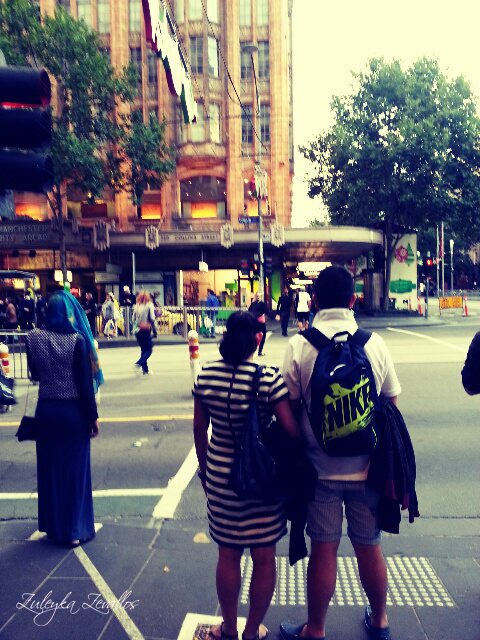
“I’m Not Your Typical Blond-Haired, Blue-Eyed Skippy”*: Second Generation Australians and Multiculturalism


This chapter was first published in 2003 by Peter Lang. It is part of an edited book, Social Exclusion: An Approach to the Australian Case.

Abstract

This chapter explores the experiences and identities of second generation migrants in the context of multicultural policy. It first provides a profile of second generation Australians and their origins. It then addresses the changing policy context, and the extent to which policy has influenced popular understandings of national identity. Next the chapter considers the social mobility of second generation Australians, focusing upon educational and occupational outcomes; their marriage and family practices, highlighting issues of cultural integration; and their sense of identity and belonging. In exploring identity and belonging, the chapter considers qualitative research concerning diverse second generation groups of non-English speaking background. Finally, the chapter considers the meaning of multiculturalism for second generation Australians, its limitations and strengths.

Continue reading “I’m Not Your Typical Blond-Haired, Blue-Eyed Skippy”*: Second Generation Australians and Multiculturalism