Diversity has been an ongoing theme of my research, since I conducted my Honours and PhD theses and my subsequent research on migration, intercultural communication and how gender affects industrial practices. Lately I’ve been working on diversity issues in science and business. This includes how social science can be used to improve management of multicultural workplaces, and how gender diversity is important to the Internet. There is a lack of diversity in sociology that also needs attention. Our traditions still privilege the knowledge of White researchers from Europe and North America (more on this another time), but we also have a narrow academic vision of what it means to practice sociology. Similarly other sciences are structured around the skills and knowledge of White middle class men. Here’s an overview of my recent writing on these issues.
Co-authored: Z. Zevallos and N. Kontoleon This article was first published in 2008 as part of the refereed proceedings of The Australian Sociological Association Conference.
Abstract
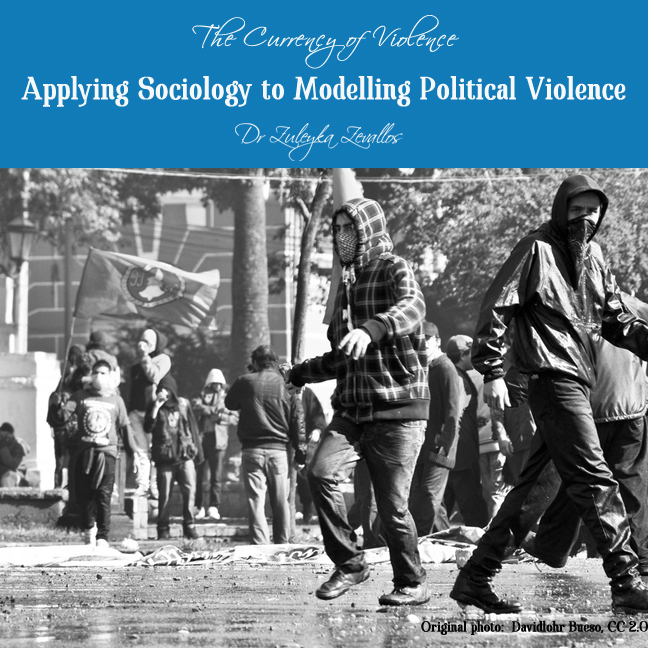
This paper explores the process of how sociological knowledge can be usefully applied in the development of a mathematical model of social phenomena. Specifically, it explores issues of translating sociological theory for the purposes of modelling and establishing the conceptual links necessary to achieve interdisciplinary understanding of political violence. The paper begins by describing the literature on violence in the Southern Philippines, focusing on Eric Gutierrez’s (2000) typology of violence. Second, it discusses social modelling as an interdisciplinary practice, including our reinterpretation of Gutierrez’ work into a conceptual scheme and how sociological theory might contribute to the development of a mathematical model based on this scheme. The paper concludes by discussing sociology’s contribution to interdisciplinary social modelling.
The discussion of interdisciplinary collaboration exemplifies how applied sociological knowledge can be appropriated for different audiences and in a variety of working contexts. This paper argues that social models which integrate sociological theories and concepts present an opportunity for people who are not social scientists to better understand the structural processes that might influence political violence.
Keywords: sociology as a discipline, crime and governance, economic, science and technology, power and inequality.
First published in the 2008 Special Edition of Nexus, the newsletter for The Australian Sociological Association. This paper makes reference to a previous job to which I am no longer affiliated.[1]
First published in the 2008 Special Edition of Nexus, the newsletter for The Australian Sociological Association. This paper makes reference to a previous job to which I am no longer affiliated.[1]
This article was first published in 2007 by Nexus. It makes reference to a previous job to which I am no longer affiliated.*
Image by FreakyKitty, ‘Mad Alchemist’, via Deviant Art.
Postgraduates are often reminded that ‘Nobody ever reads your PhD, except for your examiners’. My PhD examined the identities of second-generation migrant-Australian women living in Melbourne. I chose to investigate this area out of a deep and personal sense of passion for the topics of migration, ethnicity and multiculturalism. These three interconnected topics remain perennially important in Australian society, but when I decided to steer my career outside of academia, I wondered how I might apply my skills in new research areas to maximise my knowledge. My job hunting adventures saw me cheekily applying for every job that tickled even my slightest fancy, but never did I imagine that one day I would be working for the Defence civilian research centre [within the Australian public service],* especially given that, on multiple occasions, I have marched in anti-war protests. How did my travels out of the ethnicity studies/academic track begin?
One day, as I diligently read through The Australian Sociological Association (TASA) elist email, as all good little TASA members do, I saw a position advertised for a ‘social scientist’ for Defence research. I can still hear myself laughing incredulously over this advert: ‘A sociologist in Defence? Surely an oxymoron’, I thought to myself. ‘What could they possibly want with us?’ At first I dismissed this anomaly in my job searching horizon, but my sociological imagination had been spiked (‘Yeah, what do they want with us?’). The position description was typically obscure, and it revealed very little about what the job actually entailed. So I did the only thing I could do in order to satisfy my curiosity: I decided to apply for the job and get myself an interview in order to find out more. (Plus, it meant a free trip to Adelaide and I had never before ventured to the beautiful festival state – or the ‘city of churches’, as my friends still prefer to call it.)
This job interview was by far the most fun of all the jobs that I had applied for – the interviewers would later become my bosses, and I walked out thinking, ‘I could work with these people’. They were serious about employing sociologists to inform their work, and, more broadly, they have been attempting to challenge the existing defence culture by employing sociologists – this was encouraging to see. Peter Berger, however, may disagree. He once likened sociologists who work outside academia to a tragic pawn used by some scheming Machiavellian figure:
This paper was first published in 2007 as part of the refereed proceedings of The Australian Sociological Association Conference. It reflects experiences from a previous job to which I am no longer affiliated.
Abstract
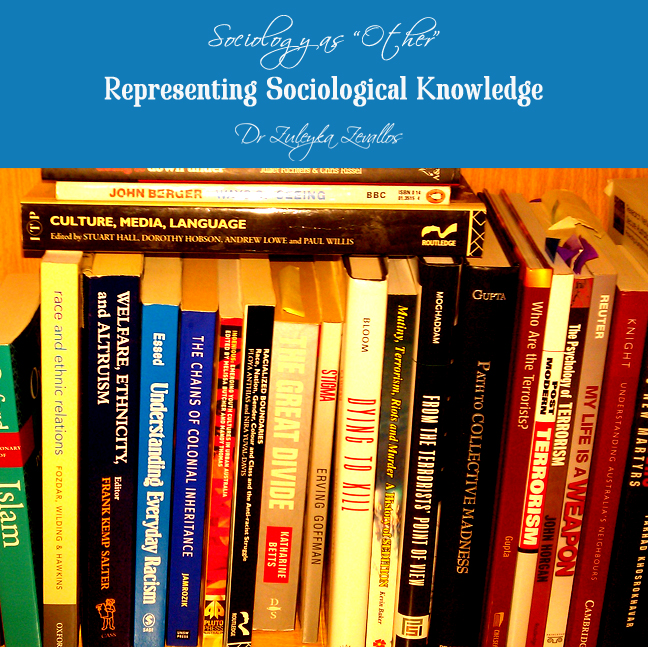
This paper evolves from my experiences of working within an applied defence and national security research environment and the gradual, often challenging journey in learning how to best represent sociological knowledge within this culture. More specifically, I write this paper as a reflection of the most recent of my ontological (mis)adventures regarding my research on suicide terrorism. In this analysis, I was working with Durkheim’s typology of suicide. It was suggested to me that I should plot Durkheim’s typology on a graph, with a view that visual schemas would assist my audience to better ‘take in’ and apply the information of my written analysis. This issue, which comes up repeatedly in my work with qualitative texts, led me to reflect upon the ‘otherness’ of sociologists within a positivist research environment where visualisation techniques are integral to scientific understanding. This paper problematises the idea that sociological knowledge should be formalised through mathematical or computational models, it explores the limitations of textual sociological analyses outside academia, and it discusses issues of ‘translation’ of sociological meaning from written to image forms.






 Dr Zuleyka Zevallos - Sociology Prose