My research has been published in Italian! Le Sociologie has translated my advice on how institutions can improve policies, practices and resources in response to public harassment of academics and researchers. Read ‘Sociologia Delle Politiche di Prevenzione Delle Molestie Pubbliche.’
Today, an update on my recent research, as well as my work on racial and gender justice published on the Women’s Policy Action Tank, an interview with me on space colonisation in Axios Space, and more.
On 25 May 2018, I was interviewed by Newsweek on the inequalities embedded into the way people imagine colonising other planets. I discussed how the language we use about ‘colonising’ Mars whitewashes the history of colonialism on Earth:
On 15 November 2017, I was interviewed for the ‘Making New Worlds’ podcast, by Erika Nesvold. The episode, ‘Why Are We Going?’ examines our motivations for settling space. The issue we discuss is not about scientific space exploration (collecting data about other planets), but whether it is ethical for humans to settle in Mars or other planets. My responses represent sociological considerations about the inequality that is inherent in colonialism. Below is an excerpt from the transcript.
On 20 July 2017, I was interviewed by Rachael Lallensack for Nature. The article, ‘Female Astronomers of Colour Face Daunting Discrimination,’ reports on new research, which finds that two-fifths report of women astronomers of colour feel unsafe at work, and 18% have concerns about attending conferences.
On 11 July 2017, I was interviewed by Buzzfeed, about a new study by Professor Kate Clancy and colleagues, showing women of colour scientists are more likely to experience race and gender harassment. Women of colour scientists are also excessively critiqued about their femininity, they have their physical abilities questioned, and they are more likely to miss professional opportunities like conferences, fieldwork, classes and meetings because their workplaces are unsafe.
My latest article is now on The Humanist (first published 15 May 2017). Below is an excerpt.
In his latest podcast episode titled “Forbidden Knowledge,” atheist author Sam Harris guides political scientist Charles Murray through an extensive defence of Murray’s widely debunked body of work, focusing mostly on The Bell Curve. Co-authored with psychologist Richard Herrnstein (who died around the time it was published in 1994), the book was universally critiqued as an example of modern-day scientific racism.
The Bell Curve was founded on a flawed premise that inferred a correlation between intelligence, socio-economic achievement, and genetics, without accounting for the effects of discrimination. The research was funded by the eugenics-promoting Pioneer Fund, while academics like Stephen Jay Gould showed that The Bell Curve obscured data.
Time has proven the book to be scientifically “reckless.” It enjoys a resurgence in 2017, the era of Trump, specifically because it is read as proof that White people are superior to racial minorities, especially Black and Latin people. […]
Harris’s characterizations of Murray’s critics are a projection of the push back he feels he’s unfairly faced. “You were one of the canaries in the coal mines,” Harris tells Murray. Having previously dismissed Murray, Harris now feels an affinity due to facing rebuke for racism (while continuing to espouse similar views).
The atheist movement has changed. Once the almost-exclusive domain of White men, calls for equality have challenged conversations, as diverse groups of women and minorities seek a more inclusive vision for atheism. It is telling that aggrieved White men feel more comfortable hosting uncritical discussions on scientific racism than engaging in anti-racism practices to reform the movement.
My latest article is now on The Humanist (first published 08 May 2017). Below is an excerpt.
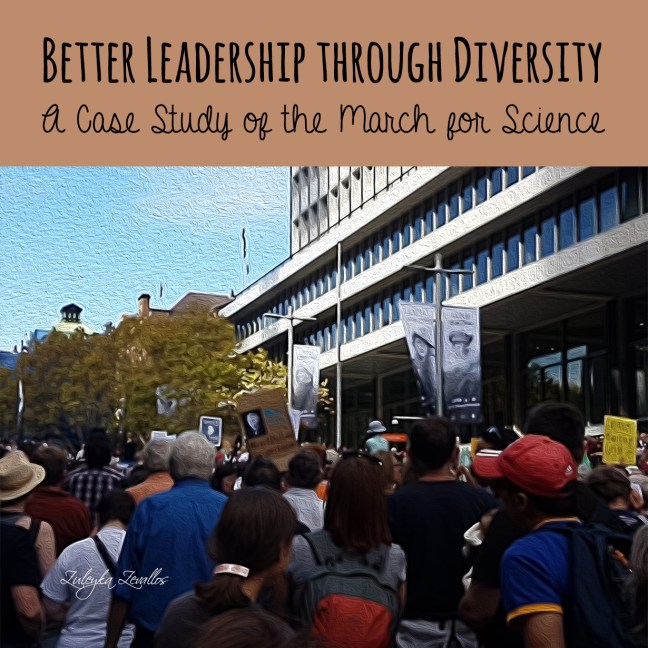
The best way to redress the inequities in science is through structural reform. This means reviewing policy through an evidence-based process. A more productive approach to diversity focuses on responsibilities of leaders to enhance measurable results. In other words, for science to make the most of everyone’s talents, leaders must “walk the talk,” modelling best practice and promoting accountability for themselves and other managers.
A vision for social change that eliminates existing inequalities must incorporate the leadership, professional expertise, and lived experiences of minorities from diverse backgrounds. Without decision-making power to shape the strategy and planning of any event, program, or organization, minorities remain on the margins. Subsequently, lacking the active representation of humanity, the full benefits of science and social justice endeavors will be limited in influence and impact.





 Dr Zuleyka Zevallos - Sociology Prose