Critical Race Studies and Intersectionality Responses to COVID-19

People walking outside Central Station, Sydney, near a COVID-19 testing clinic sign

My latest book chapter, Critical Race Studies and Intersectionality Responses to COVID-19, is available online now. The hardback textbook forthcoming.

This chapter is published as part of the book, Overlapping Inequalities in the Welfare State. It’s edited by Dr Başak Akkan, Dr Julia Hahmann, Dr Christine Hunner-Kreisel, and Dr Melanie Kuhn, and published by Springer. Read the abstract and introduction sections below.

Abstract

Race is a pervasive system that categorises and stratifies people in ways that maintain institutional and systemic inequality. Race has impacted the evolving management of public health responses to the Coronavirus (COVID-19) pandemic around the world. In Australia, state governments imposed harsh policing of migrant and refugee working class people that were not applied to white middle class people. The Government failed to meaningfully engage Aboriginal and Torres Strait Islander people in early public health planning, leaving communities who were at high risk from the virus to autonomously coordinate action without substantial state support. This chapter presents a case study of the webseries, Race in Society. The series featured Aboriginal and Torres Strait Islander scholars and practitioners, and other people of colour researchers from Australia who examined public discourses of race and the pandemic. The chapter uses the concept of intersectionality to illustrate how the welfare state exercises multiple domains of power to maintain racial inequality, even during the public health crisis of COVID-19. This chapter provides guidance for educators and researchers on how to apply critical race perspectives into their own scholarship, teaching, and activism.

Continue reading Critical Race Studies and Intersectionality Responses to COVID-19
Visibility, learning, and antiracism

A neon sign above a door in an indoor bar reads "Revolución"

I recently submitted my latest book chapter about how the sociology of race can enhance research methods. More on this in coming months. On 12 September, I will be speaking at an online panel ‘Risks of visibility in a forced spotlight.’ This is a conversation about how to deal with public harassment of researchers. I recently presented my research on improving outcomes for learners, at the National Centre for Vocational Education Research (NCVER) conference. My other work has been featured on a national antiracism website, and in a couple of news articles.

Continue reading Visibility, learning, and antiracism

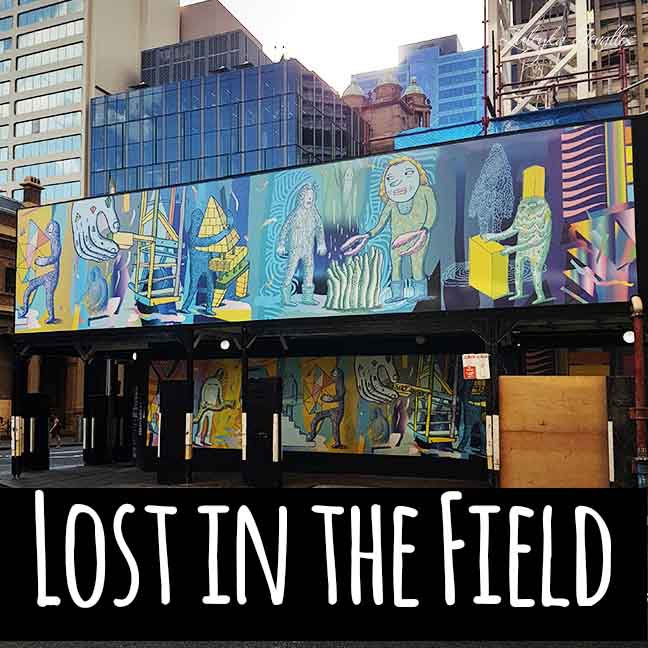
Lost in the Field

Happy new year! Since my last update, work became frenetic, as my projects moved rapidly. I lost myself in the land of fieldwork and endless reporting of results. Continue reading Lost in the Field

Interplanetary and everyday inequality

Photograph of Ai Weiwei's Law of the Journey, 2017. Photo by Zuleyka Zevallos. Features giant boat filled with hunched over black figures with linked arms signifying refugges making the perilous journey for asylum. The artwork is in a giant industrial space on Cockatoo Island, Sydney

It’s almost the end of July; where have the past three months gone? In May, I was interviewed by  Newsweek about the sociological considerations of colonising space. Specifically, the exploitation of human labour required to build new colonies, and the ongoing impact and intergenerational trauma of colonisation that still need attention on Earth.

Last week, I was interviewed by SBS News on how to deal with microaggressions. This is the routine harm done to minorities through so-called ‘jokes’ and comments that undermine, stereotype or belittle differences and make minority people feel excluded. Continue reading Interplanetary and everyday inequality