“You Have to be Anglo and Not Look Like Me”: Identity and Belonging Among Young Women of Turkish and Latin American Backgrounds in Melbourne, Australia

You Have to be Anglo and Not Look Like Me”: Identity and Belonging Among Young Women of Turkish and Latin American Backgrounds in Melbourne

This article was first published in 2008 by the Australian Geographer journal.* 

ABSTRACT

This study examines the ethnic identities of 50 second-generation migrant-Australian women aged 17–28 years. Twenty-five women were from Turkish backgrounds and 25 women were from South and Central American (or ‘Latin’) backgrounds. The overwhelming majority of the women interviewed for this study had travelled extensively to their families’ countries of origin, and their experiences growing up in Australia alongside their ongoing overseas visits shed light on transnational ties and the negotiation of ethnicity and belonging in the Australian multicultural context.

A typology of the women’s migrant-Australian identities highlights the differences and similarities of experiences among the women in both groups, and reveals the role of social context in shaping identity. Islam was a primary source of identification for most of the Turkish women, as a form of pan-ethnic identity. Participants exhibited a good deal of agency in their identity choices, and this was specifically connected to their transnational positioning. However, while most of the women took on a transnational identity to some degree, their experiences of racism and social exclusion reproduced an ambivalent sense of belonging to Australia. Their sense of being allowed to belong ‘where they are at’ remained salient to the ways in which they constructed their identities.
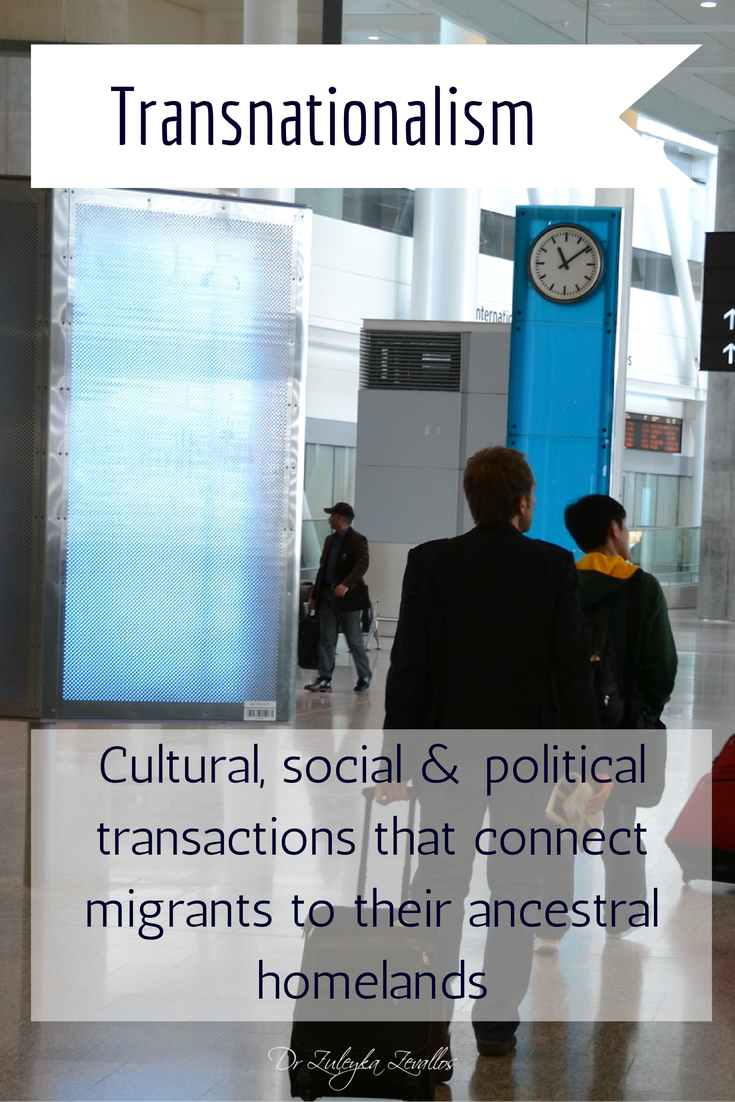
Transnationalism: Cultural, social & political transactions that connect migrants to their ancestral homelands. - Dr Zuleyka Zevallos
Transnationalism: Cultural, social & political transactions that connect migrants to their ancestral homelands. – Dr Zuleyka Zevallos

Keywords: ethnicity, identity, social constructionism, transnationalism, Turkish, Latin American, Australian culture, multiculturalism Continue reading “You Have to be Anglo and Not Look Like Me”: Identity and Belonging Among Young Women of Turkish and Latin American Backgrounds in Melbourne, Australia
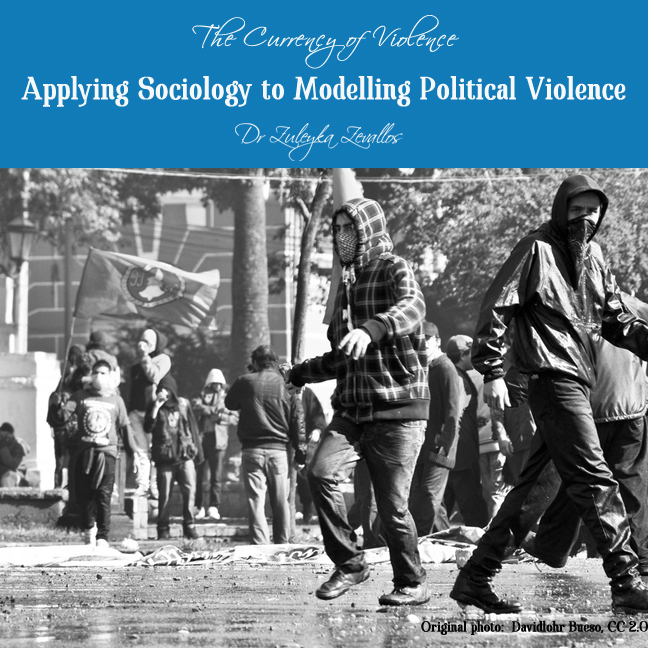
The Currency of Violence: Applying Sociological Knowledge to the Modelling of Political Violence

The Currency of Violence: Applying Sociological Knowledge to the Modelling of Political Violence

Co-authored: Z. Zevallos and N. Kontoleon
This article was first published in 2008 as part of the refereed proceedings of The Australian Sociological Association Conference.

Abstract

This paper explores the process of how sociological knowledge can be usefully applied in the development of a mathematical model of social phenomena. Specifically, it explores issues of translating sociological theory for the purposes of modelling and establishing the conceptual links necessary to achieve interdisciplinary understanding of political violence. The paper begins by describing the literature on violence in the Southern Philippines, focusing on Eric Gutierrez’s (2000) typology of violence. Second, it discusses social modelling as an interdisciplinary practice, including our reinterpretation of Gutierrez’ work into a conceptual scheme and how sociological theory might contribute to the development of a mathematical model based on this scheme. The paper concludes by discussing sociology’s contribution to interdisciplinary social modelling.

The discussion of interdisciplinary collaboration exemplifies how applied sociological knowledge can be appropriated for different audiences and in a variety of working contexts. This paper argues that social models which integrate sociological theories and concepts present an opportunity for people who are not social scientists to better understand the structural processes that might influence political violence.

Keywords: sociology as a discipline, crime and governance, economic, science and technology, power and inequality.

Continue reading The Currency of Violence: Applying Sociological Knowledge to the Modelling of Political Violence