On 15 November 2017, I was interviewed for the ‘Making New Worlds’ podcast, by Erika Nesvold. The episode, ‘Why Are We Going?’ examines our motivations for settling space. The issue we discuss is not about scientific space exploration (collecting data about other planets), but whether it is ethical for humans to settle in Mars or other planets. My responses represent sociological considerations about the inequality that is inherent in colonialism. Below is an excerpt from the transcript.
On Tuesday, I’m giving a keynote talk for Research Equity in New Zealand Aotearoa: A Suffrage Day Conversation. The event is held at the Royal Society Te Aparangi in Wellington, New Zealand, on 19 September 2017. I’ll talk about how to improve equity and increase diversity in research communities. The event is free to the public. Light refreshments from 5pm. Come along and say hello!
From the event description:
In this Suffrage Day event, Dr Zevallos will reflect on national approaches to improving the hiring, promotion, retention, recognition and participation of all women, specifically including Indigenous and transgender women, as well as other under-represented minorities in science. She will then be joined by panelists for a discussion of the specific needs of the NZ research community.
Dr Zuleyka Zevallos will then be joined by the following panelists (full panel TBC) for a discussion of the specific needs of the NZ research community. Audience questions will also be taken.
Chair: Craig Stevens, President of the NZ Association of Scientists
Anita Brady, Associate Dean (Teaching and Equity), Faculty of Humanities and Social Sciences, Victoria University of Wellington; Queer and Gender Area Chair, Popular Culture Association of Australia and New Zealand
Di Tracey, Fisheries Scientist, the National Institute for Water and Atmospheric Research (NIWA); Women’s Network Coordinator for NIWA
Izzy O’Neill, National Coordinator – Thursdays in Black, NZUSA The New Zealand Union of Students’ Associations; Researcher of the tertiary student (especially LGBTQIA) experience of sexual violence.
Joanna Kidman, Ngāti Maniapoto, Ngāti Raukawa; Associate Professor, Kaihautū, Te Kura Māori, Victoria University of Wellington, and Ngā Pae o te Māramatanga Researcher.
Richard Blaikie, Deputy Vice-Chancellor, Research and Enterprise, The University of Otago, and Vice-President (Physical Sciences) the Royal Society Te Apārangi
Details
Tuesday, 19 September, 2017
5:00pm-7:00pm
Royal Society of New Zealand
11 Turnbull St
Wellington, New Zealand.
The event is hosted by The New Zealand Association of Scientists. The event is co-sponsored by the Dodd-Walls Centre, The MacDiarmid Institute, and Te Pūnaha Matatini.
On 9 September 2017, writer and social justice coordinator with the American Humanist Association, Sincere Kirabo, interviewed me for The Establishment. He asked me about misunderstandings of intersectionality and the problems with the term “identity politics.” Below, read an excerpt of the article, ‘Why Your Criticisms of Intersectionality and Identity Politics Sound Ridiculous.’
On 20 July 2017, I was interviewed by Rachael Lallensack for Nature. The article, ‘Female Astronomers of Colour Face Daunting Discrimination,’ reports on new research, which finds that two-fifths report of women astronomers of colour feel unsafe at work, and 18% have concerns about attending conferences.
On 11 July 2017, I was interviewed by Buzzfeed, about a new study by Professor Kate Clancy and colleagues, showing women of colour scientists are more likely to experience race and gender harassment. Women of colour scientists are also excessively critiqued about their femininity, they have their physical abilities questioned, and they are more likely to miss professional opportunities like conferences, fieldwork, classes and meetings because their workplaces are unsafe.
This week, on 11 May 2017, a bill to decriminalize abortion in the state of New South Wales, Australia, was defeated 14 to 25. This means abortion, despite a two year legislative campaign ,remains a crime under the Criminal Act.
On 28 May 2017, I was interviewed on Triple J radio for the program, The Hook Up. The show explored listeners’ experiences of sexual fetishisation and prejudice in relationships, as well as what it’s like being partned with people from minority backgrounds.
I was interviewed by Mendeley about my work in equity and diversity in research environments. This is the first of a two-part interview.The original article was published on 16 May 2017.
My latest article is now on The Humanist (first published 15 May 2017). Below is an excerpt.
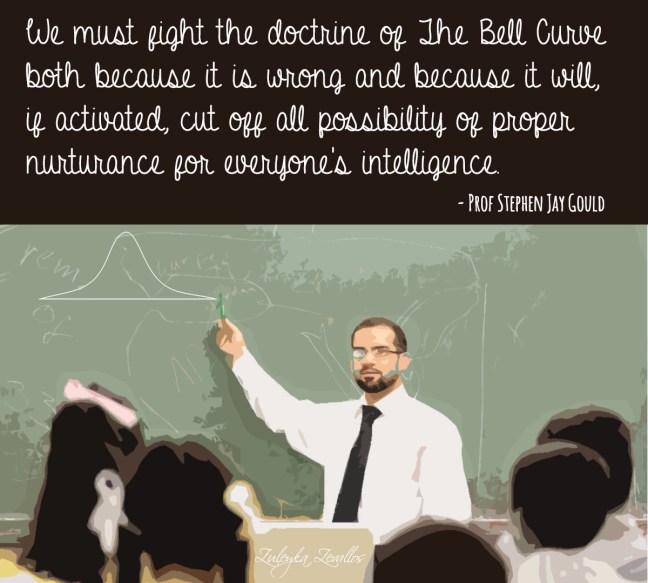
In his latest podcast episode titled “Forbidden Knowledge,” atheist author Sam Harris guides political scientist Charles Murray through an extensive defence of Murray’s widely debunked body of work, focusing mostly on The Bell Curve. Co-authored with psychologist Richard Herrnstein (who died around the time it was published in 1994), the book was universally critiqued as an example of modern-day scientific racism.
The Bell Curve was founded on a flawed premise that inferred a correlation between intelligence, socio-economic achievement, and genetics, without accounting for the effects of discrimination. The research was funded by the eugenics-promoting Pioneer Fund, while academics like Stephen Jay Gould showed that The Bell Curve obscured data.
Time has proven the book to be scientifically “reckless.” It enjoys a resurgence in 2017, the era of Trump, specifically because it is read as proof that White people are superior to racial minorities, especially Black and Latin people. […]
Harris’s characterizations of Murray’s critics are a projection of the push back he feels he’s unfairly faced. “You were one of the canaries in the coal mines,” Harris tells Murray. Having previously dismissed Murray, Harris now feels an affinity due to facing rebuke for racism (while continuing to espouse similar views).
The atheist movement has changed. Once the almost-exclusive domain of White men, calls for equality have challenged conversations, as diverse groups of women and minorities seek a more inclusive vision for atheism. It is telling that aggrieved White men feel more comfortable hosting uncritical discussions on scientific racism than engaging in anti-racism practices to reform the movement.


 Dr Zuleyka Zevallos - Sociology Prose