Enhancing Community Development in Adelaide by Building on the Social Capital of South Australian Muslim Communities

Co-authored by Lauren Tolsma and Zuleyka Zevallos
This report was first published in 2009 by the Swinburne Institute for Social Research. I republish the summary and one of the findings chapter. The study can be read free and in its entirety via the link below.

Summary

This report provides a sociological analysis of the settlement and support services available to Muslim migrants living in the suburbs of Greater Adelaide, in the state of South Australia. In particular, we seek to learn how existing Muslim organisations address the collective needs of Muslim migrants in Adelaide. We present a critical analysis of the literature on community development with specific focus on the provision of services that aid economic development.

Broadly, we use the term ‘community development’ to refer to the process of organising, educating and encouraging the participation and collaboration of local residents and stakeholders in order to improve their collective outcomes and objectives. Stakeholders might include practitioners who work in the social welfare sector, community leaders, businesses and government agencies who work with Muslim communities. These stakeholders are able to provide funds, or exchange their skills, services, prestige or other forms of support in order to achieve social change. As a pilot case study of community development, we incorporate previously unpublished data on South Australian Muslim community organisations. This includes interviews with service providers, representatives and religious leaders, as well as field notes during visits to organisations and the public events that these groups hosted around Adelaide in 2008.

Our report considers different forms of social capital in relation to Muslim community development and service provision. Social capital refers to the norms, knowledge and status enacted by social actors through their participation in social networks in order to become more socially mobile, particularly by tapping into the resources and capacities of other groups who are better off. This concept is used to examine the power dynamics in negotiations of social and economic exchange among different Muslim organisations and other groups, including mainstream service providers and government officials.
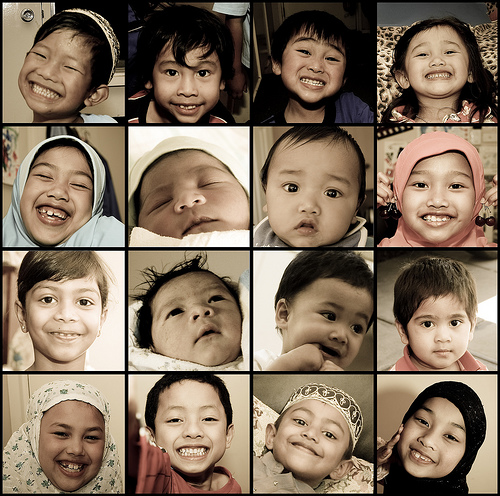
Photo by Nur Alia Mazalan. Via Flickr. CC

Our study finds that many newly arrived Muslim migrants do not understand the breadth of government-sponsored services available to them, and so they largely rely on a couple of the smaller and widely trusted Muslim community organisations for all of their needs, rather than approaching mainstream organisations for specialised services. In this connection, because some Muslim organisations have stronger visibility among new arrivals, some groups are struggling to manage their members’ requirements, especially given their limited resources. Consequently, a small number of over-worked volunteers deliver targeted assistance for which they have no formal training or qualifications. This includes crisis counselling, occupational assistance and educational advice.

We suggest that an asset-based community development (ABCD) approach would strengthen the social network ties and resources both within and external to the Muslim organisations studied. The ABCD framework is an evaluation methodology which first identifies the social and material capacities that presently exist within particular organisations. This information is used to establish practical ways in which those resources might be used to enhance their service delivery. In order to mobilise the existing assets of Muslim organisations around South Australia, the report proposes the establishment of a South Australian Muslim Community Corporation (SAMCC) which would consist of Muslim community service providers, volunteers and their Muslim clients from around South Australia. We propose a number of recommendations regarding the SAMCC including:

  • Assisting equitable decision making among Muslim organisations via the SAMCC.
  • Rather than solely privileging religious leaders, the SAMCC is set up to encourage the inclusion of a broader range of Muslim ‘voices’ that would contribute to community development activities;
  • Recruiting a SAMCC media liaison to help disseminate important information via a multi-lingual, regularly updated Muslim community newsletter and website. This includes promoting non-Muslim participation in community events, focusing on secular activities, and making available a list of culturally sensitive, mainstream service providers to Muslim community groups;
  • Restructuring the existing grants scheme of community funding. This is with a view to supporting the long-term self-sustainability of a wider range of ‘grassroots’ Muslim community organisations;
  • Funding training and hiring professional staff. This would ease the burden of Muslim organisations that are widely used and trusted but currently overextended, while still allowing them to continue providing specialised services for Muslim migrants.

The idea of the SAMCC is to provide sustainability for the Muslim community groups currently in operation, by pooling together and taking better advantage of their existing resources. In this way, it complements the asset-based approach to community development, by mobilising existing social networks and the value that those networks have for ordinary Muslims living in South Australia.

The next section presents our findings from Chapter 5 of our report.

Continue reading Enhancing Community Development in Adelaide by Building on the Social Capital of South Australian Muslim Communities

“You Have to be Anglo and Not Look Like Me”: Identity and Belonging Among Young Women of Turkish and Latin American Backgrounds in Melbourne, Australia

You Have to be Anglo and Not Look Like Me”: Identity and Belonging Among Young Women of Turkish and Latin American Backgrounds in Melbourne

This article was first published in 2008 by the Australian Geographer journal.* 

ABSTRACT

This study examines the ethnic identities of 50 second-generation migrant-Australian women aged 17–28 years. Twenty-five women were from Turkish backgrounds and 25 women were from South and Central American (or ‘Latin’) backgrounds. The overwhelming majority of the women interviewed for this study had travelled extensively to their families’ countries of origin, and their experiences growing up in Australia alongside their ongoing overseas visits shed light on transnational ties and the negotiation of ethnicity and belonging in the Australian multicultural context.

A typology of the women’s migrant-Australian identities highlights the differences and similarities of experiences among the women in both groups, and reveals the role of social context in shaping identity. Islam was a primary source of identification for most of the Turkish women, as a form of pan-ethnic identity. Participants exhibited a good deal of agency in their identity choices, and this was specifically connected to their transnational positioning. However, while most of the women took on a transnational identity to some degree, their experiences of racism and social exclusion reproduced an ambivalent sense of belonging to Australia. Their sense of being allowed to belong ‘where they are at’ remained salient to the ways in which they constructed their identities.

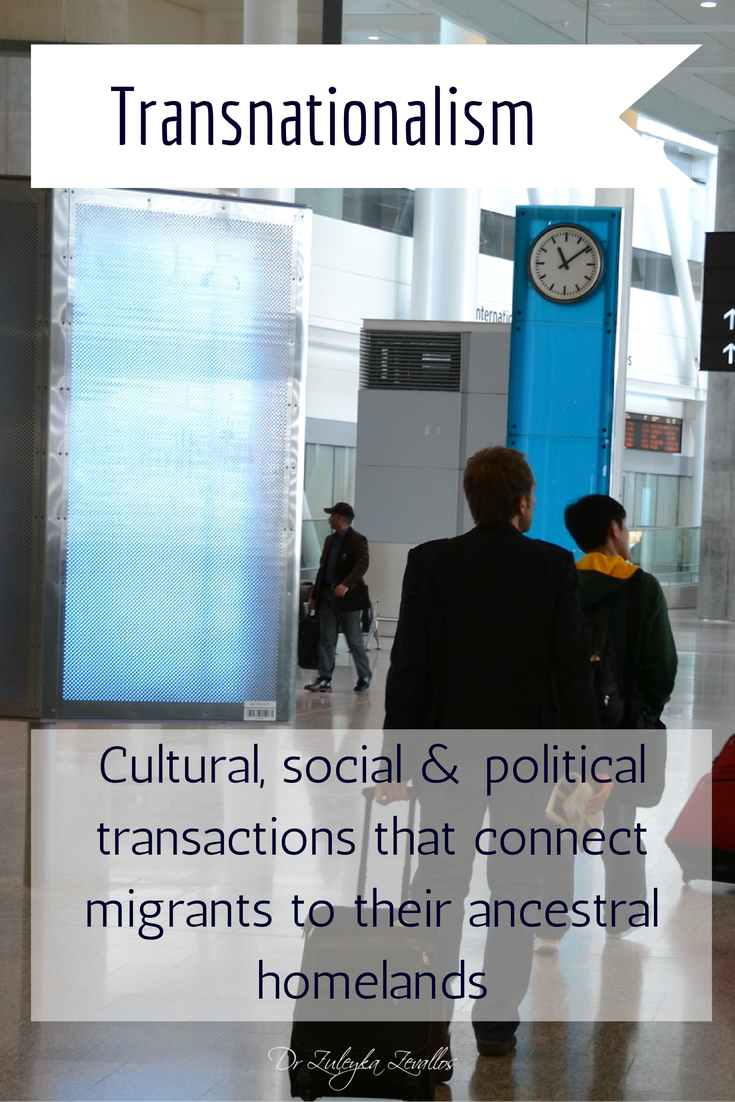
Transnationalism: Cultural, social & political transactions that connect migrants to their ancestral homelands. - Dr Zuleyka Zevallos
Transnationalism: Cultural, social & political transactions that connect migrants to their ancestral homelands. – Dr Zuleyka Zevallos

Keywords: ethnicity, identity, social constructionism, transnationalism, Turkish, Latin American, Australian culture, multiculturalism Continue reading “You Have to be Anglo and Not Look Like Me”: Identity and Belonging Among Young Women of Turkish and Latin American Backgrounds in Melbourne, Australia

The Lofty Symbolism Of The Philosopher’s Stone: Working Outside Academia As A Sociologist Of Migration, Ethnicity And Multiculturalism

This article was first published in 2007 by Nexus. It makes reference to a previous job to which I am no longer affiliated.*

Image by FreakyKitty, ‘Mad Alchemist’, via Deviant Art.

Postgraduates are often reminded that ‘Nobody ever reads your PhD, except for your examiners’. My PhD examined the identities of second-generation migrant-Australian women living in Melbourne. I chose to investigate this area out of a deep and personal sense of passion for the topics of migration, ethnicity and multiculturalism. These three interconnected topics remain perennially important in Australian society, but when I decided to steer my career outside of academia, I wondered how I might apply my skills in new research areas to maximise my knowledge. My job hunting adventures saw me cheekily applying for every job that tickled even my slightest fancy, but never did I imagine that one day I would be working for the Defence civilian research centre [within the Australian public service],* especially given that, on multiple occasions, I have marched in anti-war protests. How did my travels out of the ethnicity studies/academic track begin?

One day, as I diligently read through The Australian Sociological Association (TASA) elist email, as all good little TASA members do, I saw a position advertised for a ‘social scientist’ for Defence research. I can still hear myself laughing incredulously over this advert: ‘A sociologist in Defence? Surely an oxymoron’, I thought to myself. ‘What could they possibly want with us?’ At first I dismissed this anomaly in my job searching horizon, but my sociological imagination had been spiked (‘Yeah, what do they want with us?’). The position description was typically obscure, and it revealed very little about what the job actually entailed. So I did the only thing I could do in order to satisfy my curiosity: I decided to apply for the job and get myself an interview in order to find out more. (Plus, it meant a free trip to Adelaide and I had never before ventured to the beautiful festival state – or the ‘city of churches’, as my friends still prefer to call it.)

This job interview was by far the most fun of all the jobs that I had applied for – the interviewers would later become my bosses, and I walked out thinking, ‘I could work with these people’. They were serious about employing sociologists to inform their work, and, more broadly, they have been attempting to challenge the existing defence culture by employing sociologists – this was encouraging to see. Peter Berger, however, may disagree. He once likened sociologists who work outside academia to a tragic pawn used by some scheming Machiavellian figure:

Continue reading The Lofty Symbolism Of The Philosopher’s Stone: Working Outside Academia As A Sociologist Of Migration, Ethnicity And Multiculturalism

The Hijab as a Social Tool for Identity Mobilisation, Community Education and Inclusion

Hijab as a social tool identity education

This paper was first published in 2007 as part of the refereed proceedings of the Muslim Students at Australian Universities – Access, Inclusion and Success Conference.

Abstract

This paper explores issues of religion and identity among tertiary-educated Muslim women, and the role of education in negotiating social inclusion. Data was derived from 25 qualitative interviews with second-generation Turkish-Australian women aged 18 to 26 years. Sixteen women were attending Australian universities at the time of their interviews, and the other nine women had completed tertiary degrees. The paper examines the adoption of the hijab in the ‘presentation of self’ in the Australian context. The participants communicated an overwhelming support for the hijab as a rewarding religious practice that came with specific social duties given Australia’s status as a multicultural nation. The women likened the hijab to a ‘flag for Islam’, and so they advocated the view that Muslim women who wore the hijab literally embodied certain Islamic responsibilities, including the roles of spokesperson and educator on behalf of Islam. While they felt a sense of marginalisation from the Australian mainstream, these participants ultimately believed that the hijab provided them with an opportunity to bridge the communication gap between Muslims and non-Muslim Australians.

To this end, the women’s tertiary education shaped their understandings of the hijab in relation to Australia’s democratic ideals and its multiculturalism. This paper argues that education represents an important avenue for promoting inter-faith understanding and in strengthening young Muslim-Australians’ sense of inclusion within the multicultural nation. Continue reading The Hijab as a Social Tool for Identity Mobilisation, Community Education and Inclusion

“Because We Live in a Multicultural World”: Multiculturalism as a Lived Ideology

This article was first published in 2006 as part of the Everyday Multiculturalism Conference Proceedings

Introduction

Photo by DIAC Images on Flickr. CC.

This paper argues that Australian multiculturalism represents an ideology that migrants can draw upon in order to make sense of their everyday social experiences, their identities and their relationship to the nation.  Ideology is a widely contested concept and it has various meanings.  Generally, ideology refers to a normative set of beliefs that ‘tell us what we ought to do’ or how things should be, they are built upon central values and they have political value (Drucker 1974: 43).  A narrative of national identity which is based on multiculturalism could be seen in terms of dominant and contested ideologies.  For example, constructions of an Anglo-Celtic majority identity in Australian society could be seen as a dominant ideology, because such constructions maintain Anglo-Celtic hegemony despite our policies of multiculturalism (cf. de Lepervanche 1980; Hage 1998; Stratton 1998; Vasta 1996).  Alternatively, constructions of the nation based on cultural pluralism could be seen as competing, or contested, ideologies because they challenge Anglo-Celtic dominance.  Ideas are constructed by those in power as well as by less powerful people going about their everyday lives and so ideology can be challenged through social interaction and social discourses.

I am not looking at multicultural ideology in terms of dominant/competing ideologies, although I do discuss some hegemonic processes related to multiculturalism, such as the concept of race.  I am more interested in looking at the ideology Australian multiculturalism as a set of normative beliefs that argue Australian society should be organised around a principle of cultural plurality, and what this entails, from the point of view of the women that I interviewed for my research (for definitions of multiculturalism as an ideology see Lopez 2000: 3; Vasta 1993: 212).  I will also look at the benefits and costs that the ideology of multiculturalism has for my participants.  Looking at multiculturalism as ideology allows us to ask, why do some people believe what they do about multiculturalism?, or as Betts put it, ‘what’s in it for them?’ (1999: 30).  First, this paper describes the women’s constructions of Australian multiculturalism.  Second it investigates issues of identity.  Third, it discusses the impact of racist constructions of the Australian identity on the women’s sense of belonging to the nation.  I conclude with a discussion of Australian multiculturalism as a lived ideology in relation to the data generated by my research.

Introduction: Community/Identity: Latin Americans in Australia

This article was first published in 2005. It is the introduction to a special edition of the Journal of Iberian And Latin American Research.*

Abstract

This special section of JILAS is dedicated to the dual issues of community and identity and their impact on Latin Americans in Australia.  Academic research on Latin American migrants in Australia is scarce.  This special section of JILAS will shed light on this important, yet relatively neglected, aspect of Latin American scholarship.  Issues related to migration are quintessential in exploring the historical, cultural and political intersections of Latin American studies on a global scale.  The Australian multicultural context provides a fascinating social milieu to investigate such intersections.

The following six articles critically examine what it means to ‘be Latin’ in the Australian context and the authors reflect upon the political and social influences related to the creation of Latin community identities in Australia.  More specifically, the articles share two common themes: first, the understandings of community and the celebration of community by Latin migrants; and second, the influences of multiculturalism on the formation of Latin identities in Australia.  While the authors come from diverse academic backgrounds, their work is complementary due to their methodological approaches.  The articles are based on qualitative research studies into specific Latin groups from around Australia. 

“Todos Somos Latinos”: Ethnic Identity Constructions of Second Generation Latin-Australian Women

This paper was first published in 2005 by the Journal of Iberian and Latin American Research.

Abstract

The concept of a ‘pan-ethnic’ Latin identity is theoretically problematic, but its social significance is worthy of empirical attention. This paper presents a sociological analysis of the social construction of a pan-ethnic Latin identity using data from qualitative interviews with 25 young second generation women of South and Central American backgrounds living in Australia. This paper focuses on the way these women discussed the value of family in pan-ethnic Latin culture, their ideas about a pan-ethnic Latin ‘persona’, and the way they diminished differences between individual country-of-origin Latin groups in Australia, while emphasising their collective differences to ‘Australians’. Throughout their interviews, the women used the term ‘Australian’ to mean ‘Anglo-Australian’ (or, in their words, an ‘Anglo’ or ‘white Australian’), and I often had to clarify this with them when they spoke. In this paper, wherever the participants make reference to ‘Australians’ and ‘Australian culture’ the reader should be aware that the participants are referring to Anglo-Australians.

Continue reading “Todos Somos Latinos”: Ethnic Identity Constructions of Second Generation Latin-Australian Women

Where Are “Wogs” From? Exploring Subjective Understandings of Racism

Where are wogs from? Exploring subjective understandings of racism

This article was first published in 2004 as part of the refereed proceedings of The Australian Sociological Association Conference.

Abstract

This paper examines subjective understandings of racism expressed by fifty second generation migrant-Australian women. Twenty-five participants came from Turkish backgrounds and 25 participants came from Latin American backgrounds.  The paper focuses on three examples of everyday social interaction and considers how these examples might be connected with racist practices. The three examples include the question ‘where are you from?’, the ‘wog’ identity, and the women’s ideas about racism in Australian society.

The women believed that racism was a product of a minority of individuals who did not adhere to Australia’s multicultural spirit. This paper argues that the taken-for-granted assumptions informing the women’s everyday social interaction are better understood in terms of ‘everyday racism’ rather than as ‘individual racism’. The women’s subjective understanding of racism at an individual level prevented them from recognising racism as a social problem that might exist within Australian society.

Continue reading Where Are “Wogs” From? Exploring Subjective Understandings of Racism

“I’m Not Your Typical Blond-Haired, Blue-Eyed Skippy”*: Second Generation Australians and Multiculturalism


This chapter was first published in 2003 by Peter Lang. It is part of an edited book, Social Exclusion: An Approach to the Australian Case.

Abstract

This chapter explores the experiences and identities of second generation migrants in the context of multicultural policy. It first provides a profile of second generation Australians and their origins. It then addresses the changing policy context, and the extent to which policy has influenced popular understandings of national identity. Next the chapter considers the social mobility of second generation Australians, focusing upon educational and occupational outcomes; their marriage and family practices, highlighting issues of cultural integration; and their sense of identity and belonging. In exploring identity and belonging, the chapter considers qualitative research concerning diverse second generation groups of non-English speaking background. Finally, the chapter considers the meaning of multiculturalism for second generation Australians, its limitations and strengths.

Continue reading “I’m Not Your Typical Blond-Haired, Blue-Eyed Skippy”*: Second Generation Australians and Multiculturalism

“A Woman Is Precious”: Constructions of Islamic Sexuality and Femininity of Turkish-Australian Women

"A woman is precious": Constructions of Islamic Sexuality and Femininity

This article was first published in 2003 as part of the refereed proceedings of the The Australian Sociological Association Annual Conference. See credits below.

Abstract

This paper analyses data from 25 qualitative interviews to explore the relationship between religion, gender and sexuality for Turkish-Australian women aged 18-26. It argues that the hijab (headscarf) symbolises an idealised Muslim femininity be-cause it signifies to the participants a high level of personal religious commitment and it also embodies the Islamic mores of modesty and self-respect regarding their sexuality. Participants in the study explained that ‘a woman is precious like dia-monds, that’s why we have to keep her covered’. While they displayed a sense of agency in perceiving their ‘liberation’ from sexual objectification through the hijab, some ambiguity arose from their conceptualisation of an ideal Muslim femininity. This ambiguity is tied to Islamic and Australian narratives of female sexuality, which position women in a role responsible for regulating sexual expression and sexual attraction in both the private and public spheres.
Continue reading “A Woman Is Precious”: Constructions of Islamic Sexuality and Femininity of Turkish-Australian Women

“That’s My Australian Side”: The Ethnicity, Gender and Sexuality of Young Women of South and Central American Origin

This article was first published in 2003 by the Journal of Sociology. Below is the final manuscript submitted for publication. The published version may have some minor editorial and formatting changes.

Abstract

Through an analysis of qualitative interviews, this article explores the ethnic identities of Australian women aged 17–25 years of South and Central American backgrounds. The interviews show that expressions of Latin ethnicity are constructed around four ‘emblems’ symbolizing Latin ‘culture’– food, language, music and dancing, and festivity. Adopting a social constructionist perspective, this article details the respondents’ agency in the reconstruction of Latin ethnicity, and the consequences of the racial categorizations of ‘Australian-ness’ encountered by the participants. Their emphatic rejection of an Australian identity arises from their experiences growing up in Australia, where they are not ‘seen’ as Australian, highlighting that Australian identity continues to be regarded as synonymous with an Anglo-Celtic appearance. Nevertheless the respondents acknowledge Australian values of egalitarianism as significant when negotiating gender and sexuality. This ‘paradox’ of ethnic identity in the context of this study is best exemplified by the recurring comment, ‘That’s my Australian side’, and will be investigated through a critique on the limitations of ‘multicultural’ ideology and its lived experience.


Photo: Zuleyka Zevallos


Keywords: Australian national identity, ethnicity, gender, multiculturalism, sexuality, social constructionist perspective. Continue reading “That’s My Australian Side”: The Ethnicity, Gender and Sexuality of Young Women of South and Central American Origin