This chapter is published as part of the book, Overlapping Inequalities in the Welfare State. It’s edited by Dr Başak Akkan, Dr Julia Hahmann, Dr Christine Hunner-Kreisel, and Dr Melanie Kuhn, and published by Springer. Read the abstract and introduction sections below.
Abstract
Race is a pervasive system that categorises and stratifies people in ways that maintain institutional and systemic inequality. Race has impacted the evolving management of public health responses to the Coronavirus (COVID-19) pandemic around the world. In Australia, state governments imposed harsh policing of migrant and refugee working class people that were not applied to white middle class people. The Government failed to meaningfully engage Aboriginal and Torres Strait Islander people in early public health planning, leaving communities who were at high risk from the virus to autonomously coordinate action without substantial state support. This chapter presents a case study of the webseries, Race in Society. The series featured Aboriginal and Torres Strait Islander scholars and practitioners, and other people of colour researchers from Australia who examined public discourses of race and the pandemic. The chapter uses the concept of intersectionality to illustrate how the welfare state exercises multiple domains of power to maintain racial inequality, even during the public health crisis of COVID-19. This chapter provides guidance for educators and researchers on how to apply critical race perspectives into their own scholarship, teaching, and activism.
My research has been published in Italian! Le Sociologie has translated my advice on how institutions can improve policies, practices and resources in response to public harassment of academics and researchers. Read ‘Sociologia Delle Politiche di Prevenzione Delle Molestie Pubbliche.’
I recently submitted my latest book chapter about how the sociology of race can enhance research methods. More on this in coming months. On 12 September, I will be speaking at an online panel ‘Risks of visibility in a forced spotlight.’ This is a conversation about how to deal with public harassment of researchers. I recently presented my research on improving outcomes for learners, at the National Centre for Vocational Education Research (NCVER) conference. My other work has been featured on a national antiracism website, and in a couple of news articles.
Today, I share a new book and two media citations of my research about education, masculinity, and heterosexism. The authors write from Australia, Indonesia, and Canada.
I’ve been interviewed by NPR’s Code Switch on the growing political backlash about critical race theory. I discuss my research on moral panics about race. A moral panic is a situation or group positioned as a threat to social values. On the surface, it may seem nonsensical to ban critical race theory from schools, as it’s only taught at specialist university courses. Dig deeper: moral panics have always mobilised against a specific issue, and then moves to scale back other civic rights from minorities or marginalised groups.
In Episode 3 of Race in Society (video below), Associate Professor Alana Lentin and I lead a panel about how mainstream media create sensationalist accounts of the pandemic, and the proactive ways in which Aboriginal people and Asian people in particular lead their own responses. We spoke with Dr Summer May Finlay, a Yorta Yorta woman and Public Health Researcher at the Universities of Wollongong and Canberra. In our video below, she details how Aboriginal community controlled health organisations have effectively dealt with COVID-19 using social marketing campaigns. We also chatted with Dr Karen Schamberger, an independent curator and historian. She covers the history of Australian sinophobia (the fear of China, its people and or its culture), and how anti-Chinese racism plays out in media reports on racism and the COVID-19 pandemic. This issue remains pertinent, given that the suburbs currently under strict lockdown in Sydney have relatively large Asian populations.
Even though we filmed this discussion 10 months ago, the commentary illuminates the current COVID-19 crisis.
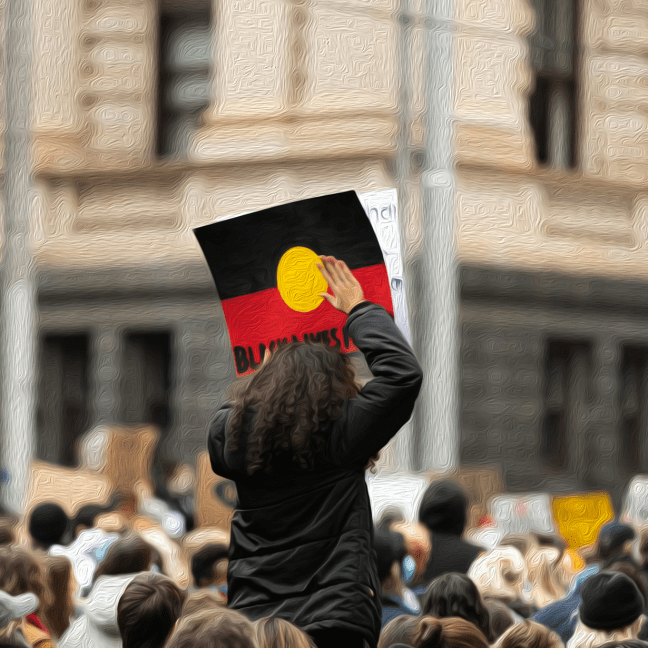
The history of Aboriginal and Torres Strait Islander social justice activism to destabilise and overcome colonial practices in Australia began with the British invasion in 1788 and has continued to the present-day. These acts of social and political organisation have strong sociological resonance that should centrally inform sociological inquiry in Australia. Yet Indigenous knowledges are peripheral to the discipline of sociology. This post is the first in a series exploring ways to decolonise sociology, through the leadership of Associate Professor Kathleen Butler, sociologist and Aboriginal woman belonging to the Bundjalung and Worimi peoples of coastal New South Wales.




 Dr Zuleyka Zevallos - Sociology Prose