Published on Women’s Policy Action Tank, 18 July. Read an excerpt below.
Continue reading Racial and Gender Justice for Aboriginal Women in PrisonRacial and Gender Justice for Aboriginal Women in Prison
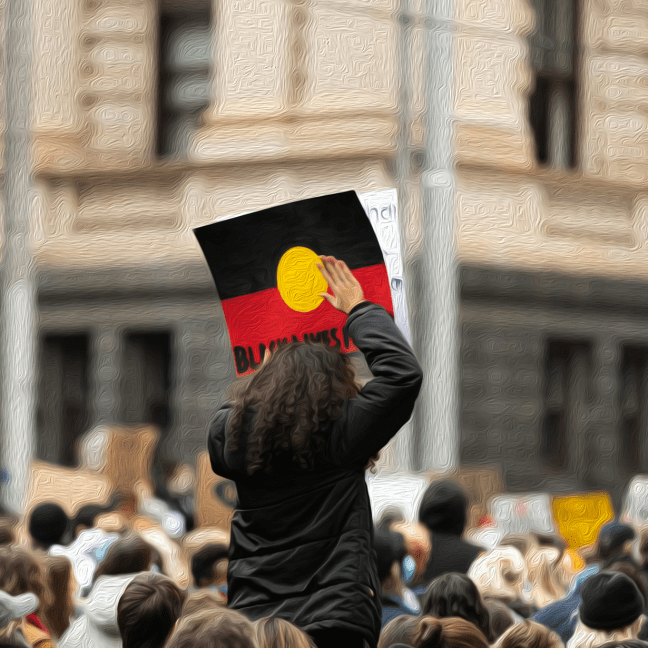

Published on Women’s Policy Action Tank, 18 July. Read an excerpt below.
Continue reading Racial and Gender Justice for Aboriginal Women in PrisonOn Tuesday, I’m giving a keynote talk for Research Equity in New Zealand Aotearoa: A Suffrage Day Conversation. The event is held at the Royal Society Te Aparangi in Wellington, New Zealand, on 19 September 2017. I’ll talk about how to improve equity and increase diversity in research communities. The event is free to the public. Light refreshments from 5pm. Come along and say hello!
From the event description:
 In this Suffrage Day event, Dr Zevallos will reflect on national approaches to improving the hiring, promotion, retention, recognition and participation of all women, specifically including Indigenous and transgender women, as well as other under-represented minorities in science. She will then be joined by panelists for a discussion of the specific needs of the NZ research community.
Dr Zuleyka Zevallos will then be joined by the following panelists (full panel TBC) for a discussion of the specific needs of the NZ research community. Audience questions will also be taken.
Book your FREE ticket.
Details
Tuesday, 19 September, 2017
5:00pm-7:00pm
Royal Society of New Zealand
11 Turnbull St
Wellington, New Zealand.
The event is hosted by The New Zealand Association of Scientists. The event is co-sponsored by the Dodd-Walls Centre, The MacDiarmid Institute, and Te Pūnaha Matatini.

On 20 July 2017, I was interviewed by Rachael Lallensack for Nature. The article, ‘Female Astronomers of Colour Face Daunting Discrimination,’ reports on new research, which finds that two-fifths report of women astronomers of colour feel unsafe at work, and 18% have concerns about attending conferences.
Continue reading Interview: Women Astronomers of Colour Face Discrimination
On 11 July 2017, I was interviewed by Buzzfeed, about a new study by Professor Kate Clancy and colleagues, showing women of colour scientists are more likely to experience race and gender harassment. Women of colour scientists are also excessively critiqued about their femininity, they have their physical abilities questioned, and they are more likely to miss professional opportunities like conferences, fieldwork, classes and meetings because their workplaces are unsafe.
Continue reading Interview: Many Women Of Colour Feel Unsafe Working In Science
Published on Seattle Star.
This week, on 11 May 2017, a bill to decriminalize abortion in the state of New South Wales, Australia, was defeated 14 to 25. This means abortion, despite a two year legislative campaign ,remains a crime under the Criminal Act.
Continue reading The Sociology of Abortion Politics, Aussie-Style
This article was first published in DiverseScholar, on 31 December 2014.
Throughout 2014, there were a couple of notable media controversies involving the reporting of social science research on gender. There have also been a range of other science publishing problems that have demonstrated the gender problems within science. These two trends are linked to media narratives and public confusion about issues of gender and science. One of the most recent media wrangles arises from The New York Times Op-Ed by psychologists Professor Wendy Williams and Professor Stephen Ceci (Williams & Ceci 2014). I have covered the methodological flaws of the study on which the Op-Ed was based (Zevallos 2014a). The study is headed by Ceci and, in addition to Williams, their research team also includes two economists. In this three-part series of articles for DiverseScholar, I provide supplementary analysis challenging the gender assumptions of their study. Specifically, I show how the study’s conclusions conflict with broader social science research on inequality within Science, Technology, Engineering and Math (STEM).
In this first article, I will show how social science research can be used to serve an agenda that undermines gender diversity. I use sociology to show the issues arising when the media and some researchers, such as Ceci and William’s team, draw on an individual narrative to explain gender inequality. In the second article, I will discuss why the media and the public enjoy discussing studies on “sex differences,” and how the appetite for simplistic explanations of gender entrench pre-existing gender biases. In the final article, I discuss why social scientists have to be extra careful when we write about gender in popular press, and how we can better support gender diversity in science.
I am focusing my analysis on cultural discussions of cisgender, as this was the (problematic) de facto focus of Ceci and colleagues, given that they only talked about “men” and “women.” Cisgender describes men and women whose gender identity aligns with their ascribed sex (the biology and bodies they were born into). This means I am not predominantly writing about transgender, intersex and other genders; but, I signal here that this is a narrow conception of gender.
The concept of sex is distinct from gender. Sex describes biological differences between men and women; but, gender looks at how culture influences the myriad of ways that these differences are perceived. Gender is more fluid than two binary categories of male and female (Zevallos 2014b). Explanations that draw on sex rather than gender, such as Ceci and colleagues’ study, implicitly rely on a biological narrative, by saying girls and boys are “naturally” attracted to different tasks and that they make different choices because they’re male or female. Herein lays the biggest problem with the communication of gender to the masses, especially via the media. Simplistic explanations win out, while the complexity of gender inequality is swept under a narrative of individual women’s choices. Let’s explore these issues by delving deeper into the biases in the study by Ceci and his team.
Continue reading Science Inequality in the News: Avoiding Dangerous Gender Narratives in STEM
This article was first published in DiverseScholar, on 20 April, 2015.
In my previous DiverseScholar article, I showed why the study behind The New York Times Op Ed (claiming the end of sexism) was methodologically flawed and ideologically biased [Zevallos 2014]. I showed that a focus on an individual choice narrative to explain why women are disadvantaged in STEM (Science, Technology, Engineering and Math) is fundamentally unsound when understood alongside the long-standing empirical evidence from the social sciences. Here, I will review several science controversies related to the editorial and institutional decisions within STEM. These patterns show that everyday interactions contribute to gender inequality, from the use of images, to dress, to the way distinguished women scientists are described in the media. I start with a selected timeline of events highlighting gender inequality in STEM.
Continue reading Sexism in Science Reporting
On 11 November 2015, I was interviewed by Lauren Morello, for Nature. The article, ‘Science and sexism: In the eye of the Twitterstorm,’ explores how social media supports public discussion about sexism in science. Read an excerpt below.
Continue reading Interview: Science and Sexism
Published on London School of Economics Impact Blog.
Robust empirical research shows that women are less likely to be hired for STEM jobs, as well as promoted, remunerated and professionally recognised in every respect of academic life. Earlier this month, however, a widely reported study suggested gender bias is largely a myth. Zuleyka Zevallos evaluates the study and argues it fails to simulate the conditions in which hiring decisions are made. The process of hiring any professional is the outcome of social interaction. Biases shape social exchanges.
Continue reading The Myth About Women in Science? Bias at Work in the Study of Gender Inequality in STEM
On 6 February 2015, my research with my colleagues was featured in an article by Brigid Schulte for The Washington Post.
Continue reading Interview: Black and Latina Women Scientists Sometimes Mistaken for Janitors
On 3 December 2014, I was interviewed by Stephanie Pappas, for Live Science. The article, ‘Wikipedia’s Gender Problem Gets a Closer Look,’ looks at sexism in Wikipedia. Wikimedia Foundation reports that only 10% of Wikipedia editors are women. Read an exercept below.
Continue reading Interview: Wikipedia’s Gender Problem Gets a Closer Look Dr Zuleyka Zevallos - Sociology Prose