Race at Work Within Social Policy

Hands of a person of colour typing on a laptop

My chapter ‘Race at Work Within Social Policy,’ has been published in the book, Critical Racial and Decolonial Literacies: Breaking the Silence, edited by Dr Debbie Bargallie and Dr Nilmini Fernando. Read an excerpt below.

Continue reading Race at Work Within Social Policy

Critical Race Studies and Intersectionality Responses to COVID-19

People walking outside Central Station, Sydney, near a COVID-19 testing clinic sign

My latest book chapter, Critical Race Studies and Intersectionality Responses to COVID-19, is available online now. The hardback textbook forthcoming.

This chapter is published as part of the book, Overlapping Inequalities in the Welfare State. It’s edited by Dr Başak Akkan, Dr Julia Hahmann, Dr Christine Hunner-Kreisel, and Dr Melanie Kuhn, and published by Springer. Read the abstract and introduction sections below.

Abstract

Race is a pervasive system that categorises and stratifies people in ways that maintain institutional and systemic inequality. Race has impacted the evolving management of public health responses to the Coronavirus (COVID-19) pandemic around the world. In Australia, state governments imposed harsh policing of migrant and refugee working class people that were not applied to white middle class people. The Government failed to meaningfully engage Aboriginal and Torres Strait Islander people in early public health planning, leaving communities who were at high risk from the virus to autonomously coordinate action without substantial state support. This chapter presents a case study of the webseries, Race in Society. The series featured Aboriginal and Torres Strait Islander scholars and practitioners, and other people of colour researchers from Australia who examined public discourses of race and the pandemic. The chapter uses the concept of intersectionality to illustrate how the welfare state exercises multiple domains of power to maintain racial inequality, even during the public health crisis of COVID-19. This chapter provides guidance for educators and researchers on how to apply critical race perspectives into their own scholarship, teaching, and activism.

Continue reading Critical Race Studies and Intersectionality Responses to COVID-19

Public Harassment Prevention

Two figures walk from a brightly lit room into a neon blue corridor, where a man waits

My research has been published in Italian! Le Sociologie has translated my advice on how institutions can improve policies, practices and resources in response to public harassment of academics and researchers. Read ‘Sociologia Delle Politiche di Prevenzione Delle Molestie Pubbliche.’

Working on Social Change

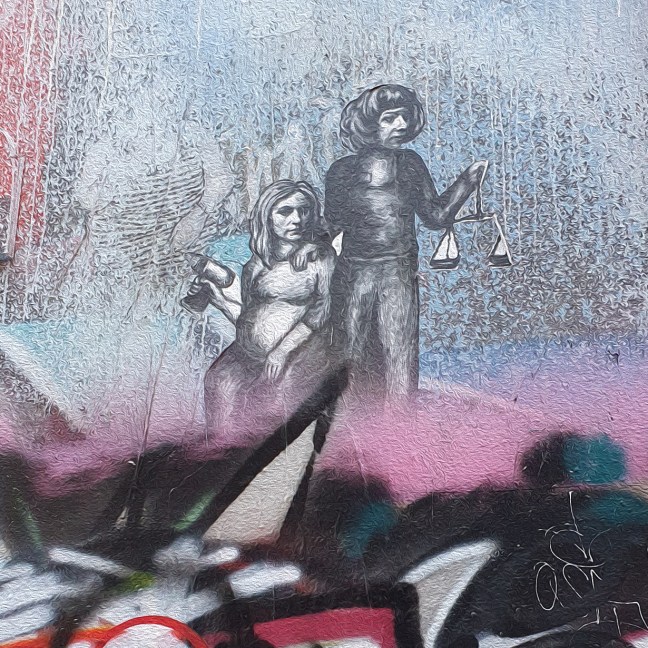
Paste-up drawing on a wall, showing two women. One woman is sitting and holds an electric drill. The other woman stands and holds scales of justice

Happy New Year! Today I summarise my major projects for the past year, covering public health, vocational training, disability, technology, and gender equity.

Continue reading Working on Social Change

My Work Translated Into Italian

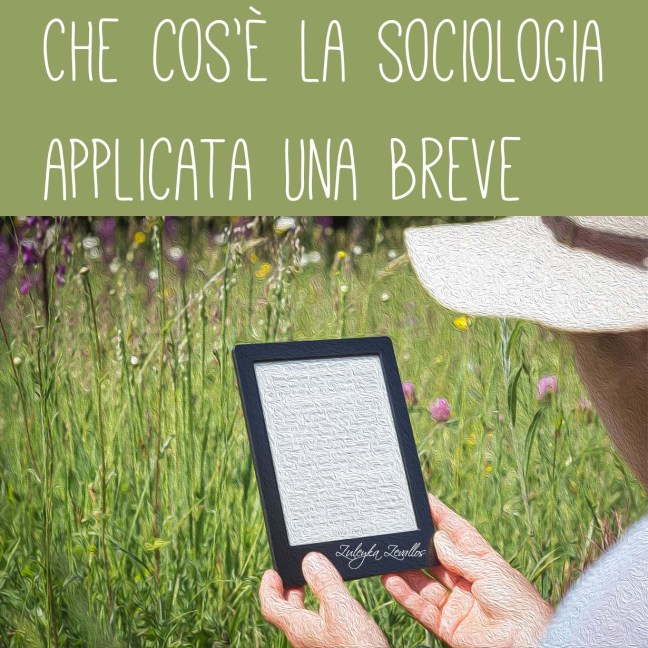
A White person is seen from behind, mostly out of frame. They sit in a field reading an eBook

My work on “What is Applied Sociology?,” has been translated into Italian and published by Sociologia Clinica and Homeless Book publishers. The translation is published as a free eBook, Che cos’è la sociologia applicata una breve introduzione.

Check it out!

My work has been previously translated into French and a forthcoming publication will be in Persian.

The Rest of You Can Go Next

A yellow sign with a black arrow points to the right. It is hung on a wooden fence, with three plants of variable height in the forefront

On 6 February, I presented at the Australian Critical Race and Whiteness Studies Association (ACRAWSA) Conference. My paper was titled, ‘The Rest of You Can Go Next: Using Intersectionality in Equity, Diversity and Inclusion Programs.’ The distinguished keynote was delivered by Professor Patricia Hill Collins, author of Black Feminist Thought, and, along with Sirma Bilge, co-author of Intersectionality. It was a wonderful conference. I felt good about my paper. My summary of the event will be on my blog soon. Continue reading The Rest of You Can Go Next

Interview: Sociologist at Work

This is the second of a two-part interview with me on Mendeley Careers, first published on 17 May 2017. (Find part one here.)

Continue reading Interview: Sociologist at Work

Interview: Sociology at Work

Workshop participants reading

I was interviewed by Mendeley about my work in equity and diversity in research environments. This is the first of a two-part interview. The original article was published on 16 May 2017.  

Continue reading Interview: Sociology at Work

Event: Race and Dating, 26 April, Sydney

I’ll be on a panel in Sydney, on 26 April, talking about the sociology of race and dating!Details about the event from the promoter.

Conscious Dating – Race and Dating

Conscious Dating Co explores what it means to date consciously in a series of panels and workshops.

What influences attraction? Is racial bias affecting your dating life? How do you deal with being fetishised? And can we all expand our dating pool by mindfully inspecting our own racial biases?

Conscious Dating Co-founder Kaila Perusco will host a panel discussion with award-winning journalist, documentary filmmaker and host of SBS’s Date My Race, Santilla Chingaipe; writer and equal rights advocate Andy Quan; and applied sociologist Dr Zuleyka Zevallos.

Join us for a fascinating insight into modern dating!

Get tickets.

Details
Wednesday, April 26, 2017
7:00pm 8:30pm
107 Redfern Street Redfern, NSW, 2016 Australia

Conscious Dating - Race and Dating

Turning Social Science Into a Business

Home office desk with laptop, phone, coffee cup and notebooks

In mid-2015, I was featured on the University College London Researchers about my time running my consultancy. Read more below about my career transition and how I use social science when working with not-for-profit organisations and businesses.

Dr Zuleyka Zevallos earned a PhD in Sociology from Swinburne University, Melbourne, where she remains an Adjunct Research Fellow. She currently runs her own business, Social Science Insights, a Research and Social Media Consultancy working with small to medium businesses, government, and not-for-profits who require social research, training and policy advice. She also provides research-driven social media content to help public education and health campaigns. Here Zuleyka shares her career journey, and offers tips to researchers thinking of moving out of academia.How did you move from studying for a PhD to starting your own consultancy?

After completing my PhD at the end of 2004, I continued to work as a lecturer. I left in 2006 because there was no job security in academia. I found it difficult to find full-time academic work in my field, but once I started looking in business and policy sectors, the job choices were surprisingly abundant. I’ve reflected on the fact that, at first, it was very disheartening to give up on my dream job in academia, but once I realised the multiple career possibilities in other industries, the decision to leave was empowering.

A career beyond academia leads to diverse experiences, and the work will likely take you to places you may not have expected. Having had little luck for months trying to get an academic job, I decided to apply for unconventional roles that sounded interesting. I received a number of different offers, which showed me how valuable my PhD degree was to non-academic employers. I took a job in federal government as a Social Scientist. I moved interstate to take the position. Within five years, I had led two interdisciplinary team projects working on social modeling and intercultural communication, and I also conducted research on a range of topics, from political violence to media analysis to the socio-economic outcomes of migrants and refugees. The role was varied so that I worked with many different clients, and I also attended conferences and published articles, which kept me engaged with my academic peers.

In late 2011, I decided to move back to my home state permanently. I worked as a Senior Analyst on an environmental health and safety investigation. I led a team of 23 researchers examining 30 years worth of reports and company data, as well as analysing interviews with 300 emergency service workers. We evaluated the connections between training and environmental practices, the chemicals used during exercises, and the high rate of cancer and other illnesses amongst emergency service workers.

After the investigation ended, I decided to set up my business. I had plenty of leadership experience, and had worked autonomously in setting up various projects in my previous roles, plus I had worked with many different client groups. Setting up the business required a lot of research, and I also took a business management course. I’ve been working as a consultant for the past couple of years.
Continue reading Turning Social Science Into a Business

Interview: Google Plus a Ghost Town? Not If You Look at Communities

On 18 November 2014, I was interviewed by Simon Owens, for PBS MediaShift. The article, ‘Google Plus a Ghost Town? Not If You Look at Communities,’ explores the thriving communities on Google Plus. I discussed one of the communities I co-moderate with a team of a dozen scientists with PhDs in various fields, Science on Google+.

Continue reading Interview: Google Plus a Ghost Town? Not If You Look at Communities