On 3 July 2019, Axios featured an interview with me on space colonisation. Below is an excerpt:
Continue reading Interview: New Moon Mission Brings Back Old IdeasInterview: New Moon Mission Brings Back Old Ideas


On 3 July 2019, Axios featured an interview with me on space colonisation. Below is an excerpt:
Continue reading Interview: New Moon Mission Brings Back Old Ideas
I’ve been interviewed about feminism and my career by Lady Science, plus, learn more about my recent research and secondment in the Central Coast. Continue reading Feminist Sociology and the Mundane

It’s almost the end of July; where have the past three months gone? In May, I was interviewed by Newsweek about the sociological considerations of colonising space. Specifically, the exploitation of human labour required to build new colonies, and the ongoing impact and intergenerational trauma of colonisation that still need attention on Earth.
Last week, I was interviewed by SBS News on how to deal with microaggressions. This is the routine harm done to minorities through so-called ‘jokes’ and comments that undermine, stereotype or belittle differences and make minority people feel excluded. Continue reading Interplanetary and everyday inequality

On 13 July 2018, I was interviewed by Michelle Elias on microaggressions, for SBS News. Below is an excerpt featuring my comments.
Continue reading Interview: How to Deal With Microaggressions
On 15 November 2017, I was interviewed for the ‘Making New Worlds’ podcast, by Erika Nesvold. The episode, ‘Why Are We Going?’ examines our motivations for settling space. The issue we discuss is not about scientific space exploration (collecting data about other planets), but whether it is ethical for humans to settle in Mars or other planets. My responses represent sociological considerations about the inequality that is inherent in colonialism. Below is an excerpt from the transcript.
Continue reading Interview: Making New Worlds
On 01 October 2017, I was interviewed by Triple J, on ‘Having a racial preference.’
Continue reading Interview: Having A Racial Preference
On 9 September 2017, writer and social justice coordinator with the American Humanist Association, Sincere Kirabo, interviewed me for The Establishment. He asked me about misunderstandings of intersectionality and the problems with the term “identity politics.” Below, read an excerpt of the article, ‘Why Your Criticisms of Intersectionality and Identity Politics Sound Ridiculous.’
Continue reading Interview: Intersectionality and Identity Politics
On 20 July 2017, I was interviewed by Rachael Lallensack for Nature. The article, ‘Female Astronomers of Colour Face Daunting Discrimination,’ reports on new research, which finds that two-fifths report of women astronomers of colour feel unsafe at work, and 18% have concerns about attending conferences.
Continue reading Interview: Women Astronomers of Colour Face Discrimination
On 11 July 2017, I was interviewed by Buzzfeed, about a new study by Professor Kate Clancy and colleagues, showing women of colour scientists are more likely to experience race and gender harassment. Women of colour scientists are also excessively critiqued about their femininity, they have their physical abilities questioned, and they are more likely to miss professional opportunities like conferences, fieldwork, classes and meetings because their workplaces are unsafe.
Continue reading Interview: Many Women Of Colour Feel Unsafe Working In Science
On 6 February 2015, my research with my colleagues was featured in an article by Brigid Schulte for The Washington Post.
Continue reading Interview: Black and Latina Women Scientists Sometimes Mistaken for Janitors
This article was first published in 2008 by the Australian Geographer journal.*
This study examines the ethnic identities of 50 second-generation migrant-Australian women aged 17–28 years. Twenty-five women were from Turkish backgrounds and 25 women were from South and Central American (or ‘Latin’) backgrounds. The overwhelming majority of the women interviewed for this study had travelled extensively to their families’ countries of origin, and their experiences growing up in Australia alongside their ongoing overseas visits shed light on transnational ties and the negotiation of ethnicity and belonging in the Australian multicultural context.
A typology of the women’s migrant-Australian identities highlights the differences and similarities of experiences among the women in both groups, and reveals the role of social context in shaping identity. Islam was a primary source of identification for most of the Turkish women, as a form of pan-ethnic identity. Participants exhibited a good deal of agency in their identity choices, and this was specifically connected to their transnational positioning. However, while most of the women took on a transnational identity to some degree, their experiences of racism and social exclusion reproduced an ambivalent sense of belonging to Australia. Their sense of being allowed to belong ‘where they are at’ remained salient to the ways in which they constructed their identities.
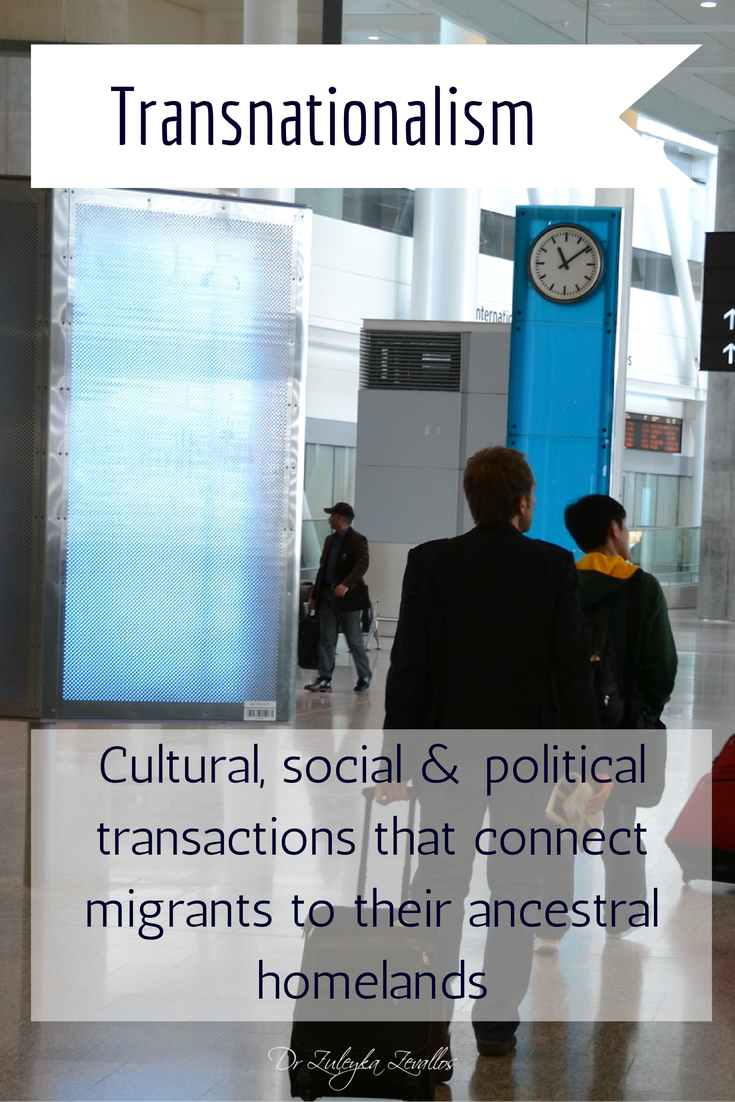
Keywords: ethnicity, identity, social constructionism, transnationalism, Turkish, Latin American, Australian culture, multiculturalism Continue reading “You Have to be Anglo and Not Look Like Me”: Identity and Belonging Among Young Women of Turkish and Latin American Backgrounds in Melbourne, Australia
 Dr Zuleyka Zevallos - Sociology Prose