I spoke with Angeline Chew Longshore from The Mauimama about my article, “Using sociology to think critically about Coronavirus COVID-19 studies.” We talked about how I was motivated to write about the sociology of science because I saw so many people struggling to make sense of the pandemic. We discussed how national cultures are impacting responses to the virus, why precarious employment in healthcare is causing high rates of infection, and how we can better check whether the information we hear is credible.
The past of the month has proved especially busy. I’ve done a few media interviews and launched a new webseries with Associate Professor Alana Letin, called Race in Society. More on these projects in the coming days. Today, I look back on my interview with 3CR Diaspora Blues about my article, Pandemic, race and moral panic. Listen below, with a transcription for accessibility further down.
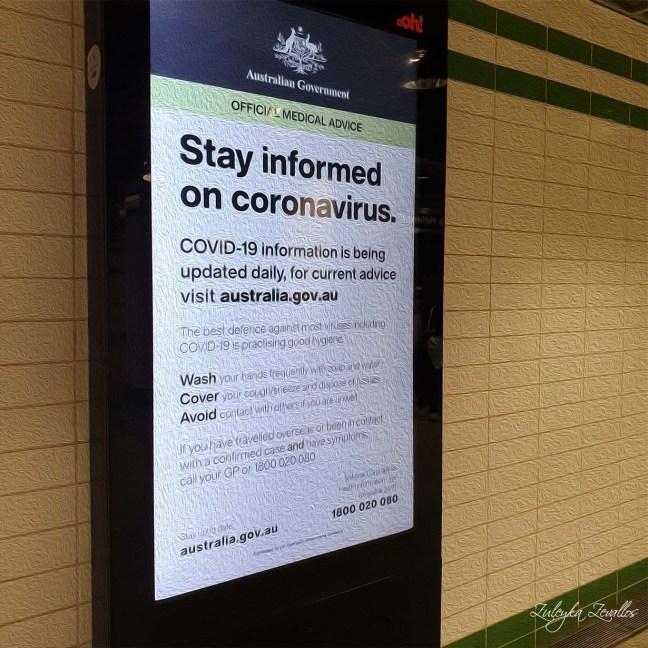
Since I last wrote you, the Coronavirus (COVID-19) pandemic has obviously transformed the world. I went into voluntary lockdown in early March, and Australia went into official lockdown at the end of March. I’ve been writing a lot on the pandemic on my social media, especially on Twitter and on Facebook and Instagram stories, as well as on my research blog.
Today, from 2.30pm-3pm AEST, you’ll be able to hear about some of this work on COVID-19. I did an interview with Bigoa and Baasto on 3CR Diaspora Blues about my research on Pandemic, race and moral panic. Below is a preview of the interview.
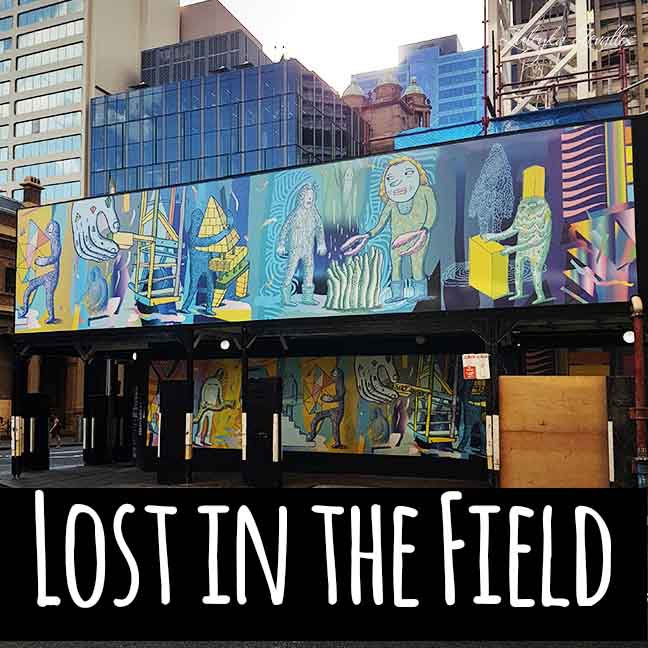
Happy new year! Since my last update, work became frenetic, as my projects moved rapidly. I lost myself in the land of fieldwork and endless reporting of results. Continue reading Lost in the Field
Conscious Dating Co explores what it means to date consciously in a series of panels and workshops.
What influences attraction? Is racial bias affecting your dating life? How do you deal with being fetishised? And can we all expand our dating pool by mindfully inspecting our own racial biases?
Conscious Dating Co-founder Kaila Perusco will host a panel discussion with award-winning journalist, documentary filmmaker and host of SBS’s Date My Race, Santilla Chingaipe; writer and equal rights advocate Andy Quan; and applied sociologist Dr Zuleyka Zevallos.
Join us for a fascinating insight into modern dating!
Over the past couple of months, I have been using sociology to show how everyday experiences of sexism and racism feed into the educational and career trajectories of women and minorities in various disciplines within Science, Technology, Engineering and Mathematics (STEM). Here I include summaries of my writing from recent times, which show how social policy can dramatically impact on women’s educational outcomes. I’ve also covered how childhood socialisation impacts on girls’ transition from school to university. Experiences in higher education are also gendered, that is, culture shapes how women and men think about what happens to them at university. We see this clearly in relationships with thesis supervisors and informal socialising, as well as in more formal processes in administration. I’ve also highlighted some progress in diversity, namely the appointment of a lesbian technology expert, Megan Smith, who now holds a key role with the American government. Despite this achievement, various controversies in STEM related to social media use by scientists, research on women and high profile science events signify that despite strides forward, women and minorities are still the targets of inequality and marginalisation.
This article was first published in April 2012 by the Taylor & Francis journal, Intercultural Education.
Abstract
International students represent a large economic and international relations investment for Australia. Australian universities are increasingly relying upon overseas students for their revenue, but these institutions are not adequately addressing the special learning, linguistic, cultural and religious needs of these students. Despite their Australian education, international students experience various difficulties in finding work in their field of study after they graduate. Poor English-language, communication and problem-solving skills are the biggest obstacles to securing ongoing and satisfying jobs. Employer biases regarding international students are equally a problem. This paper provides a demographic context of the international student population in Australia and it also addresses the gaps impeding their full social participation in Australian educational institutions. This paper argues that a stronger focus on the socialisation of international students is likely to increase their educational and career satisfaction. Educational providers would better serve international students by focusing on practical learning, career-planning and reinforcing the social and cultural skills valued by Australian employers.
Spanish Abstract:
Los estudiantes internacionales representan una gran inversión económica así como de relaciones internacionales para Australia. Las universidades Australianas dependen financieramente cada vez mas del ingreso de estudiantes de ultramar, sin embargo no responden adecuadamente a las necesidades culturales, lingüísticas y religiosas de estos estudiantes. No obstante su formación universitaria, los estudiantes internacionales encuentran barreras para la obtención de empleo en su campo profesional luego de su graduación en universidades australianas. Este artículo presenta el contexto demográfico general de la población estudiantil internacional en Australia e identifica las barreras para su integración social. El argumento central en el presente artículo es que una mayor atención a la organización social de estos estudiantes puede no solamente mejorar su satisfacción educacional sino también profesional. Las instituciones educativas Australianas podrían ofrecer mejores servicios a los estudiantes internacionales si avocaran recursos para el entrenamiento de habilidades prácticas que ayudaran a estos estudiantes a planear su carrera y mejorar sus capacidades sociales y culturales.
Benefits of intercultural education in Australia
Keywords: international students; intercultural learning; employment; Australian labour market; graduate career planning.
There has been an increase in consumers’ reliance on credit and rising consumer debt. The increase is especially problematic for those least able to afford debt of any kind – welfare recipients. This qualitative study reports on 120 Australian welfare recipients’ attitudes towards debt, their understanding about what constitutes acceptable debt and the debt-management strategies they adopt. The results of this research show that welfare recipients see debt as a way of life and as a means of survival in a society where a core value appears (to them) to be the acquisition of material wealth. Their status as income earners and therefore their capacity to service debt is less than others. Consequently, we could expect that their debt levels would be proportionally less; however, many participants in this research did not appear to understand the long term consequences of their level of debt. The paper concludes with a discussion as to how social marketing can be applied to potentially assist this vulnerable consumer group and the wider community.
Keywords: Vulnerable consumers; Consumer credit; Debt management; Social marketing








 Dr Zuleyka Zevallos - Sociology Prose